
Raul Fernandes, June 7, 2026 | Increasingly, industries have been developing many practices that lead to lower environmental impact and greater sustainability of their processes. There is already much evidence (e.g., here and here) that human actions are the causes of climate change on our planet, and improving this situation depends heavily on using cleaner production processes.
Tribology, lubrication, and sustainability
Tribology and lubrication have a very large impact on industries and their processes. According to studies by Holmberg et al. (2017), friction and wear in mechanical systems account for almost 23% of total global energy consumption, especially in the transportation, manufacturing, and power generation sectors. Global emissions due to friction and wear combined can reach up to 8,120 MtCO2 annually. The potential for savings with new technologies and good practices in lubrication and tribology can reach 18% in the short term and 40% in the long term.
Producing one kWh of energy, producing a rolling bearing, and producing 1kg of grease means emitting greenhouse gases into the atmosphere. For example, according to SKF, 17kg of CO2e are emitted to produce its spherical roller bearing 22220. Therefore, a well-selected lubricant with good lubrication practices can help reduce emissions through reduced consumption of bearings, energy, and lubricant itself.
In addition, in the study published by Woydt (2021) and in the report by Woydt et al. (2021), it was presented that tribology can impact 6 of the 17 UN Sustainable Development Goals (#3, #7, #8, #9, #12, and #13). The author lists the indicators of each objective and relates them to the contributions of tribology. Many of these contributions are related to lubrication and to energy efficiency (Woydt, 2021; Woydt et al., 2021). In addition, Rich Wurzbach (in Precision Lubrication Magazine) links some of the 17 objectives to good grease lubrication practices and condition-based analysis.
We can readily conclude that the topics of tribology, lubrication and sustainability actually share much synergy. Small changes in machine lubrication can generate savings in consumption and emissions. Therefore, this article will focus on two sustainable bearing lubrication practices that can help lower the environmental impact of any industrial operation.
Sustainable Practice 1: Avoiding Over-Greasing in Bearings
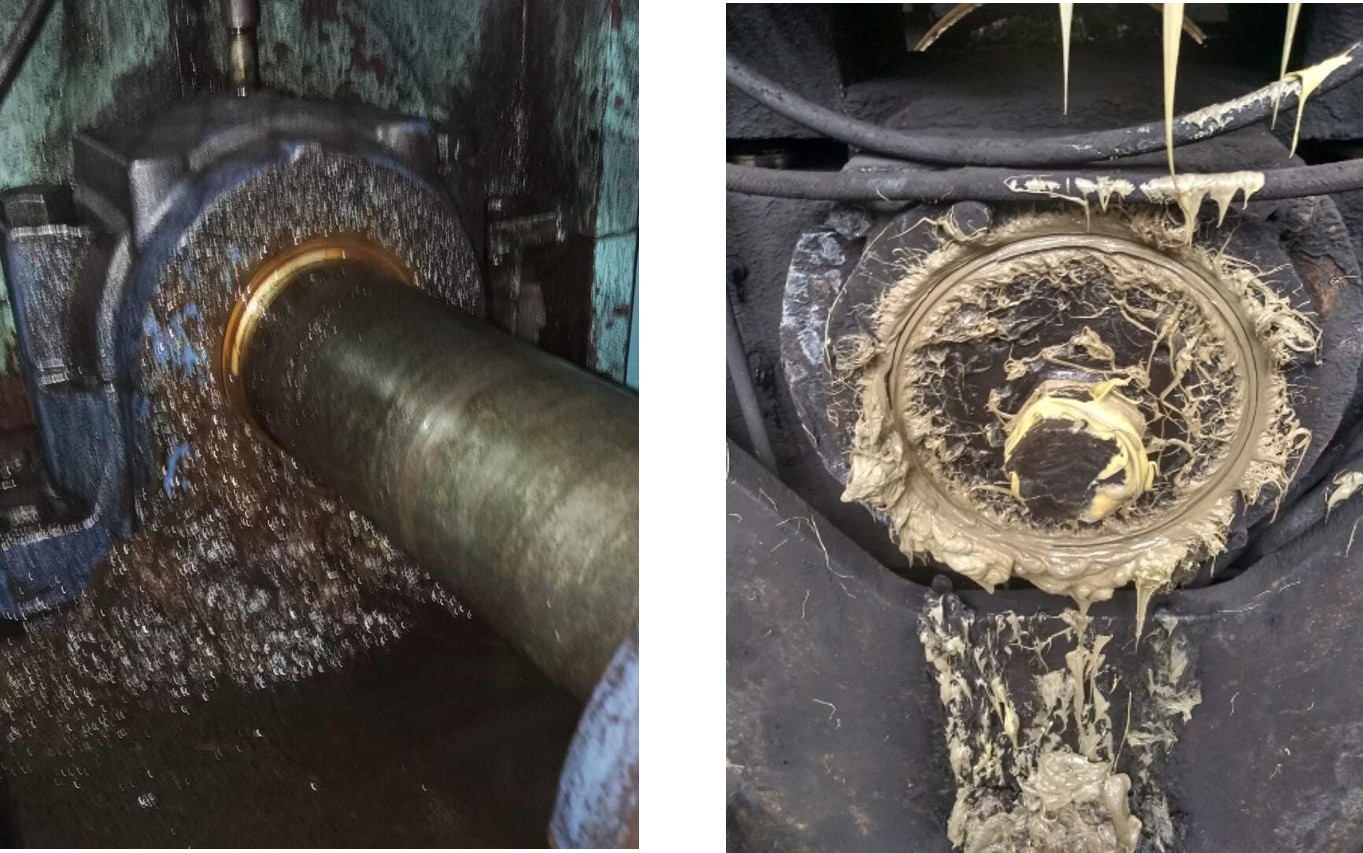
Figure 1: Examples of bearings with excess grease.
Impacts of over-greasing
It is very common to find bearings such as those in Figure 1 in industrial operations. Lubricating “until new grease comes out of the shaft” is a well-established practice among maintenance and lubrication teams. The problem is that this is a bad practice and not at all sustainable.
Lubricant is extremely important for the life and reliability of bearings. However, when lubricating, you are introducing a material that offers resistance to component movement. If we apply it in excess, that resistance is too much and the bearing will operate with high loss due to grease dragging and, therefore, less energy efficiency.
In bearings operating at low speeds (speed factor < 90,000), those losses may be imperceptible. On the other hand, if they are high-speed bearings such as in hammer mills and fans, those losses are going to have a significant impact.
Making a brief parallel, imagine a person standing in a pool full of water. If only his ankles are submerged, he will feel almost no resistance when trying to move (a bearing with little grease). If he is totally immersed and makes very slow movements, he will practically perceive very little resistance (a bearing with excess grease and low speed). But if the person is totally immersed and tries to make fast movements, he will feel a very strong resistance from the water (a bearing with excess grease and high speed).
Normally, these higher resistances and losses are converted into heat, and the bearings begin to work at a higher operating temperature. This increase in temperature can degrade the grease prematurely, which decreases its performance and increases the temperature even more.
On top of that, when the maintenance team identifies that the pillow block is working at high temperature, they think: “Hmm, high temperature, so there must be a lack of grease. I should lubricate more.” And when they put in more grease, they unwittingly worsen this vicious cycle.
This is so real that fans or compressed air tubes are often installed and directed at the pillow block to help reduce the temperature. Figures 2 and 3 show examples of these unsustainable practices which, apart from consuming more grease and energy to operate the component, consume additional energy simply for cooling the pillow block.
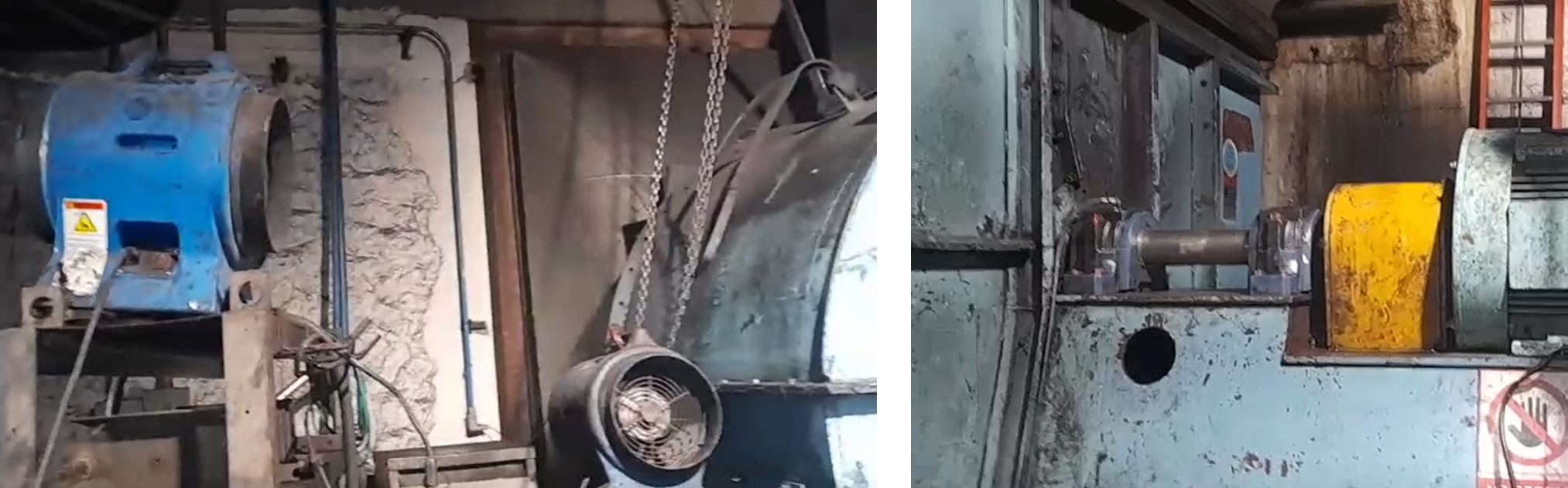
Figure 2: Strong irony: a fan has been positioned to cool the pillow block of a fan.
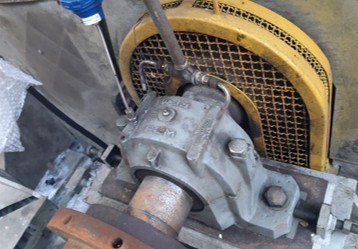
Figure 3: Compressed air tubes positioned for cooling a pillow block from a fan.
How to define the optimal amount of grease
Bearing manufacturers such as SKF, NSK and Schaeffler recommend that bearings operating at medium and high speeds be filled between 30 and 40% of the empty space. To reach that value and know how much grease we should apply to a bearing, there are two methods: a simple approach and a more complete one.
In the simple method, only two bearing dimensions and one constant are used. The formula is:.

where Q is the amount of grease in grams, D is the outer diameter of the bearing in mm, B is the width of the bearing in mm, and 0.005 is the constant. This constant considers a filling of 33% of the empty space with grease that has a density of 0.9 g/cm3. That’s true for most cases, but it’s important to know what’s implied.
The second and more complete method arrives at the amount of grease through the calculation of the empty space of the bearing. This is done by calculating the volume of the bearing as if it were a solid cylinder and subtracting from the actual volume of the bearing calculated by its mass and density. The formula is:

where V is the volume of the empty space of the bearing in cm3, D is the outer diameter in mm, d is the inner diameter in mm, B is the width in mm, and m is the mass in kg.
From this calculation, the percentage of empty space that needs to be filled is still defined optimally between 30 and 40%, and the value of V is converted from volume to mass through the density of the grease with this formula:
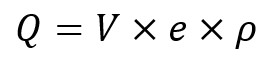
where Q is the amount of grease in grams, e is the % of empty space to be filled, and ρ is the density of the grease.
Although more complex, this second method is more accurate for defining the optimal amount of grease for a rolling bearing. And to facilitate the use of this method, there are already calculators online that can make these automatic calculations, such as at the Interlub site here.
Reduction of consumption and emissions
As an example, consider a company with a thousand bearings code 6220 for lubrication. We are not going to change the lubricant or the frequency of re-greasing, but we will simply decrease the amount of grease so that we fill only 33% rather than 100% of the empty space. Using the calculator presented, we have:
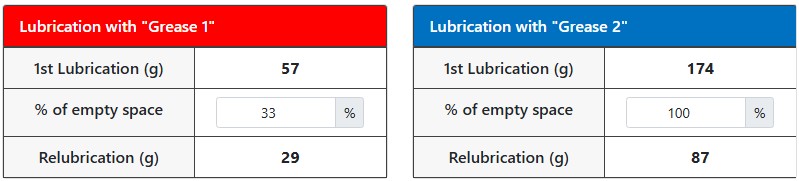
Figure 4: Examples of amount of grease calculation.
Each bearing would need 87 grams of grease in each relubrication when filling 100% of the empty space, but only 29 grams with the partial fills. That represents a 67% reduction in grease consumption alone. If these 1,000 bearings have a monthly re-greasing frequency, the annual savings with the partial fills would be 696 kg of grease per year. In CO2e emissions, the reduction would be about 1.4 tons per year (assuming a lithium grease and mineral oil).
Success story: Steel plant
In a steel plant, the bearings of a heat extraction fan in an area of engines was operated with a severe excess of grease due to manual lubrications based on full fill (Figure 5). This bad practice generated very high temperatures (between 85 and 95°C) and the need to operate a cooling fan permanently for the pillow blocks. Here the 22224 bearings work at a speed of 1200 rpm, driven by a 250 hp motor.
By incorporating SPM monitoring into the pillow blocks, it was possible to determine precisely when and how much grease to apply. This technical adjustment made it possible to reduce annual consumption from 23kg to just 720g, avoiding not only lubricant waste but also the generation of emissions associated with its production and disposal.
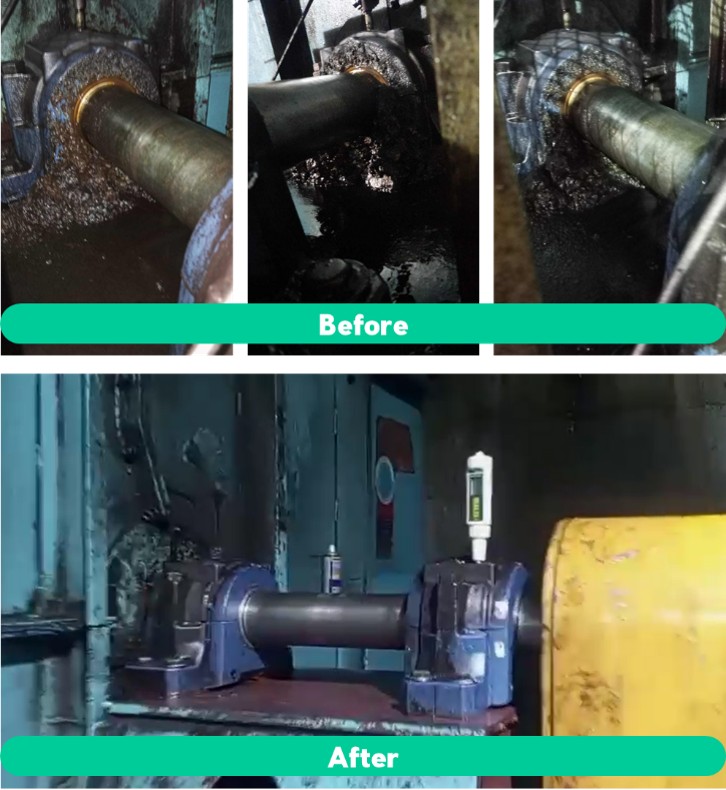
Figure 5: Before and after applying the optimal amount of grease.
Once the bearing was no longer made to operate with excess grease, friction decreased dramatically, and the temperature dropped to a stable range of 50–65°C. With this correction, the cooling fan was no longer necessary, eliminating its energy consumption. The reduction of grease consumption and the elimination of the cooling system represented a direct impact on energy efficiency, thus yielding a reduction of emissions of approximately 26 tons of CO2e per year.
Success story: Glass plant
In a glass packaging plant, the bearings of an electrostatic precipitator fan overheated due to incorrect lubrication: 300g per bearing had been applied in each intervention, raising temperatures to more than 100°C. The 22228 bearings work at 1750 rpm and, because they are a critical system, they have a sensor that shuts down the electric motor when the temperature exceeds 100°C. For this reason, compressed air tubes had been installed to cool the pillow blocks so that temperatures would not reach that threshold. The system worked as intended, lowering the temperature to a range between 80 and 90°C. However, grease continued to degrade, bearing failures continued to occur, and energy consumption increased (Figure 6).
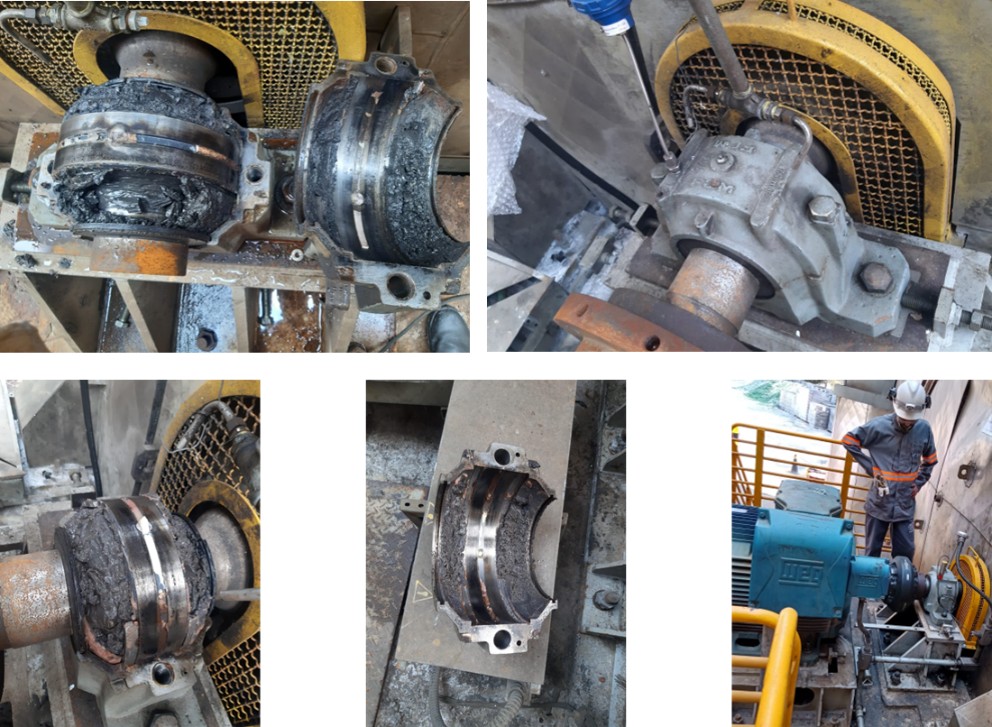
Figure 6: Evidence of excess grease, its degradation, and the compressed air cooling of the pillow block.
By recalculating the optimal amount of grease using the method presented, now only 140g is needed in each intervention. In such manner, it was possible to reduce the total annual consumption of grease in half, from 69kg to 35kg, thus preventing not only 34kg of waste but also the emissions associated with its manufacture, transport, and disposal.
This corrective action allowed the bearings to operate well within controlled thermal conditions (47–55 °C), eliminating the need for compressed air tubes for cooling. This meant a reduction of more than 50,000 kWh/year in energy consumption. Thanks to the precise calculation of the amount of grease, the equipment regained efficiency, reduced indirect emissions of approximately 21 tons of CO2e per year, and improved the environmental and economic performance of the process.
Sustainable Practice 2: Selecting Water-Resistant Greases
Impact of water on bearings
There are many applications in the industry where bearings are exposed to water contamination conditions. Although machine designers strive to design systems in the best way, in some industrial processes such contamination is inevitable. Hot rolling, continuous casting, filter presses, CIP in the food industry, among others, are examples where processes can routinely expose bearings to water contamination in a critical way.
Water contamination in bearings is extremely critical and impacts premature failure of these elements. In some lubrication magazines, it is promoted that 1% of water has been associated with up to 90% reduction of bearing life (https://noria.mx/lube-learn/lubricacion-maquinaria-lube-learn/certificacion-mlti/contaminacion-por-agua-en-el-aceite/). In a study by Cantley (1976), the life of the bearing was modeled according to the contamination of the oil with water at concentrations of 25, 100 and 400 ppm. It was identified that the relative life of the bearing decreases by more than 50% when the water concentration increases from 100 to 400 ppm.
In addition, water accelerates the oxidation of the base oil, facilitating the formation of by-products, and causes its viscosity to decrease. In greases, water helps to wash out the lubricant from lubrication points and reduce its consistency, thus representing a further increase in lubricant consumption.
In short, water has a very negative impact on bearings and lubricants. In processes where it is inevitable that water reaches the bearing, one of the ways to combat it is through lubricants with technologies that provide greater resistance and protection to this contamination.
Water-resistant grease technology
There are many thickeners and additives that can be used in the formulation of a lubricating grease. The development of new technologies introduces many new elements that help to increase the life of a bearing and increase the life of the grease, even in very critical water conditions. Synthetic oils, hydrophobic additives, and hybrid thickeners are innovations that can help industrial operations meet their sustainability goals.
When selecting a grease for a bearing exposed to a water contamination condition, it is extremely important to evaluate the ASTM D1264 test in its data sheet. That is one of the main tests to evaluate the resistance of a grease to water washout. Basically, a bearing is lubricated with grease, its mass is measured, and then the bearing is operated under a constant flow of water at either 38°C or 79°C, according to the intended application of the grease. Next it is placed in an oven to evaporate the excess water, and then its mass is measured again. The idea is to assess how much grease was washed out by comparing the mass measurement before and after the operation. The result of the test is in % of mass removed during the test: the lower the percentage, the better the resistance of the grease.
Generally speaking, there are no bad greases, but there are greases that are poorly suited for applications. In a quick search for multipurpose greases, you’ll find many greases with simple lithium thickener and mineral oil viscosity between ISO VG 150 and 220. These greases usually have a water washout value of more than 5% easily, some reaching more than 10%. In a bearing exposed to water, using one of these greases means having to increase the consumption too much to ensure seal and protection of the element.
For water contamination conditions, greases with higher viscosity of base oil (greater than or equal to ISO VG 460, always depending on the speed of the bearing) and newer thickeners are normally used with greater reliability and lower consumption. Calcium sulfonate complex is a thickener that has been around for decades and can offer a water washout of less than 2%, depending on the rest of the formulation.
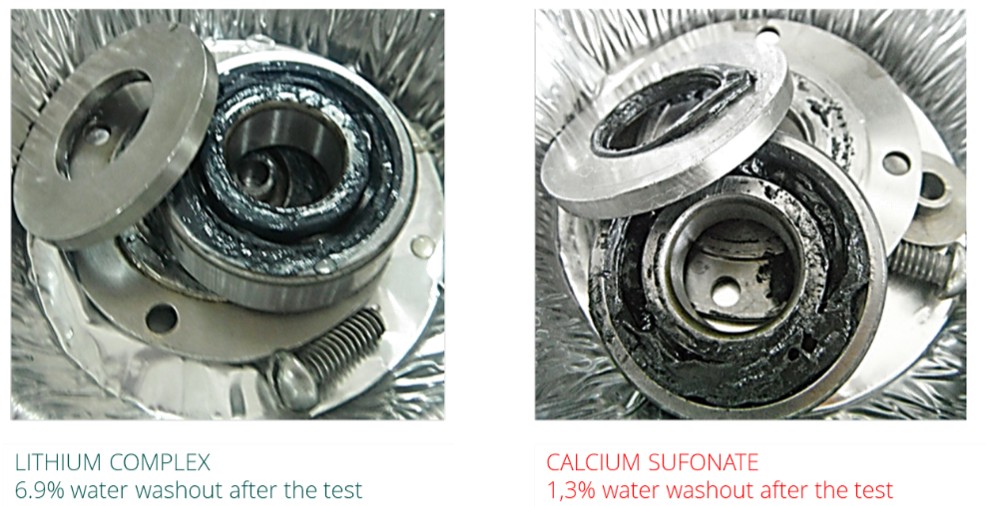
Figure 7: Bearings after ASTM D1264 test lubricated with a lithium complex grease (left) and calcium sulfonate grease (right).
Other options are hybrid greases, which have characteristics of two thickeners added together. For example, a polyurea-aluminum grease combines the advantages of a polyurea plus an aluminum complex into a single thickener. In an example of grease with that thickener and ISO VG 680 oil with polymers, the water washout result can be lower than 1.5%.
The comparison of the ASTM D1264 test—for example, lithium with 10% and calcium sulfonate with 1%—does not mean that the user will be able to have a consumption 10x lower if he makes the change in his application. The laboratory test is a good reference to help in the selection, but it does not represent exactly what happens in the field, since there will be many more variables.
Success story: Sugar and alcohol factory
For instance, in an application of filter presses in the sugar and alcohol industry, much of the water, which is being separated from solid waste, contaminates pillow blocks in conveyors. In a field test, three pillow blocks were lubricated with different greases:
a. Lithium grease, ISO VG 220 mineral oil
b. Calcium sulfonate complex grease, ISO VG 460 mineral oil
c. Polyurea-aluminum grease, ISO VG 680 mineral oil
After the first lubrication of the three pillow blocks with the same amount of grease, the pillow blocks were opened for inspection every week. Figure 8 presents the results for the three greases. The lithium grease (left) presented a very strong washout of the grease, resulting in little grease mass present and high exposure of the bearing. The calcium sulfonate grease (center) resisted the condition very well, reaching 42 days of operation and still with a lot of grease mass protecting the bearing. Polyurea-aluminum grease (right) also reached 42 days with much of the grease mass present and little exposure of the bearing.
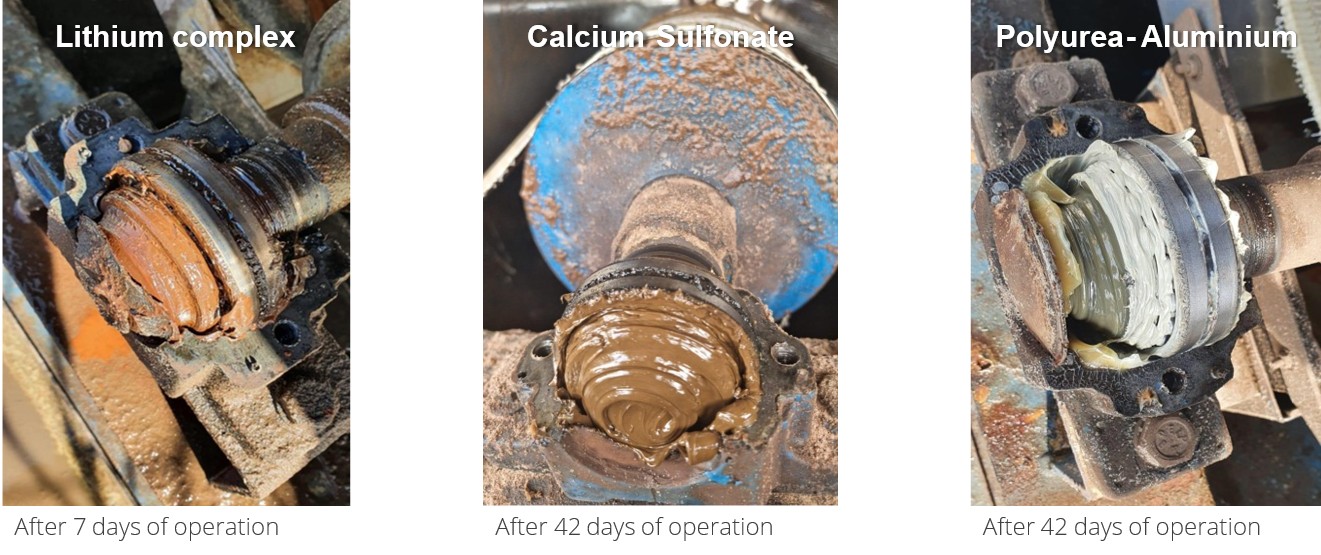
Figure 8: Result in the field of greases with different thickeners subjected to water contamination conditions.
In this case, the grease selected to replace lithium was the polyurea-aluminum hybrid. For reliability reasons, the re-greasing frequency was left at 30 days. Even so, considering the conveyors with 50 bearings and 100 grams of re-greasing, with lithium grease the annual consumption had been approximately 260kg. With the new hybrid grease, it was possible to reach 60kg with greater reliability, as the bearings are more protected against the water. Result: a more sustainable operation.
Success story: Steel mill
In a steel industry, in the process of hot rolling mills, roller bearings are exposed to an unavoidable critical condition of water and high temperature.
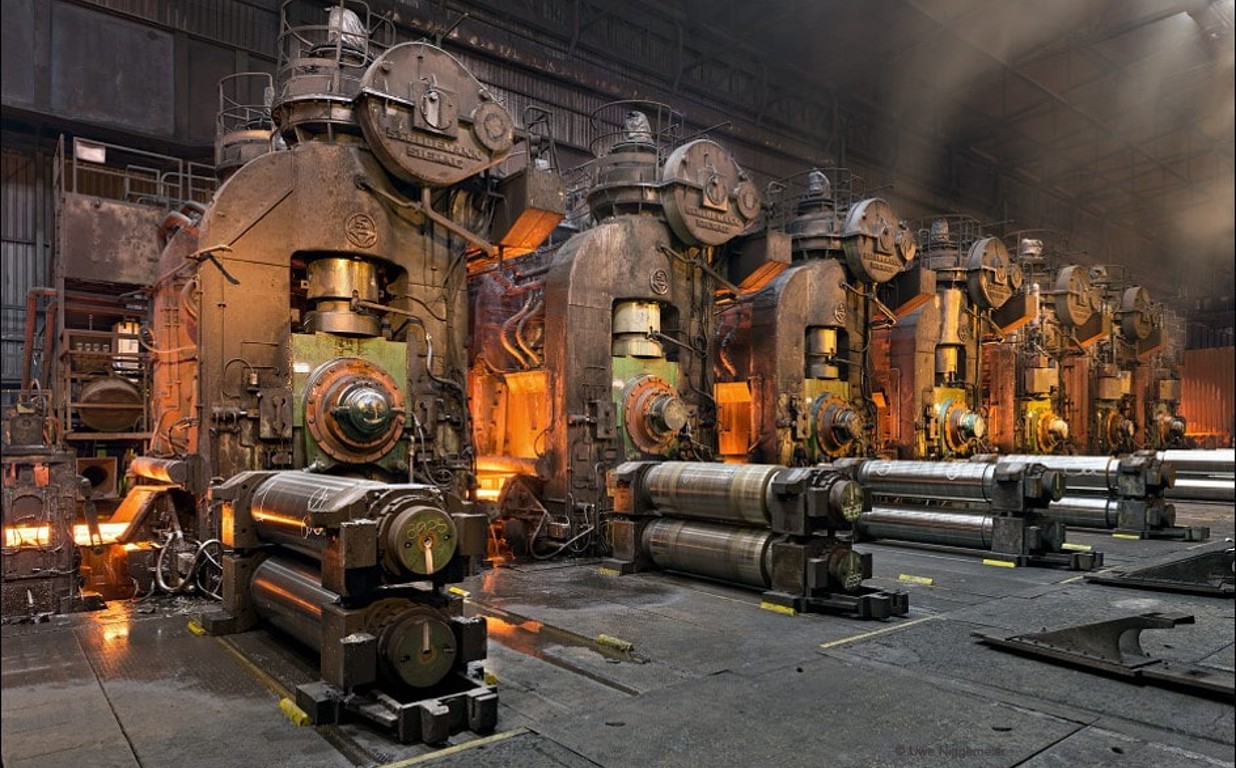
Figure 9: Detail of hot rolling mills.
At the exit of the kiln, the slab passes through a rough mill and then through seven finishing mills, as shown in Figure 10.
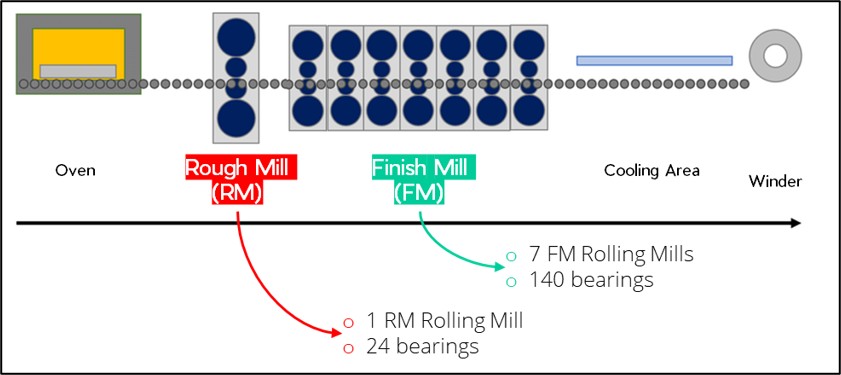
Figure 10: Hot rolling process of steel.
These bearings were lubricated with a lithium grease that fulfilled its function of protecting the bearings well. There were no accounts of excessive failures, nor too many unscheduled stoppages. However, to reach that reliability, grease consumption was too high. Per year, the consumption of lithium grease reached 44 tons.
In an analysis of the application, switching to a grease with calcium sulfonate complex thickener was suggested, with better water resistance and better results in the water washout test. With the new grease, consumption dropped to just seven tons per year, without impacting bearing consumption or unscheduled stoppages (Figure 11).
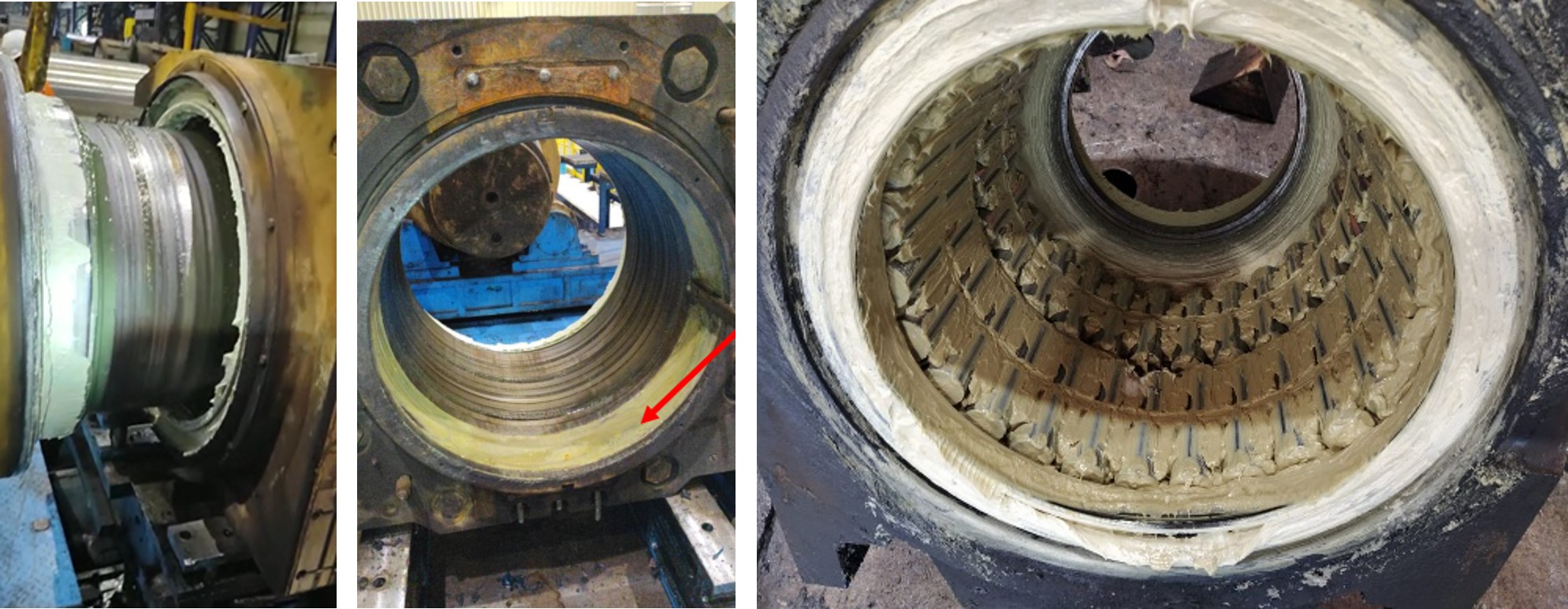
Figure 11: Detail of calcium sulfonate grease in good condition in the pillow block and bearing after a campaign of 70 thousand tons of steel.
This reduction in consumption represents 37 tons of grease per year that would no longer have to be produced. Without impacting reliability and productivity, just with the change in grease technology, it was possible to make the operation much more sustainable. The estimated savings in CO2 emissions were approximately 70 tons per year.
References
NASA. Climate change. Accessed on: November 30, 2025, from https://science.nasa.gov/climate-change/
United Nations. What is climate change? Accessed on: November 30, 2025, from https://www.un.org/en/climatechange/what-is-climate-change
Holmberg, K., & Erdemir, A. (2017). Influence of tribology on global energy consumption, costs and emissions. Friction, 5(3), 263–284. https://doi.org/10.1007/s40544-017-0183-5
SKF. 22220 EK – Spherical roller bearing. Accessed on: November 30, 2025, from https://www.skf.com/ar/products/rolling-bearings/roller-bearings/spherical-roller-bearings/productid-22220%20EK
Woydt, M. (2021). The importance of tribology for reducing CO2 emissions and for sustainability. Wear, 474–475. https://doi.org/10.1016/j.wear.2021.203768
Woydt, M., Hosenfeldt, D. T., Luther, R., Scholz, C., Bäse Magna Powertrain GmbH, M., Wincierz, C., & Schulz, J. (2021). Wear protection and sustainability as cross-sectional challenges.
Wurzbach, R. Grease analysis: Achieving sustainability in asset management. Precision Lubrication Blog. Accessed on: November 30, 2025, from https://precisionlubrication.com/articles/grease-analysis/
Noria Latin América (2025). Water contamination in the oil. Accessed on: November 30, 2025, from https://noria.mx/lube-learn/lubricacion-maquinaria-lube-learn/certificacion-mlti/contaminacion-por-agua-en-el-aceite/
Cantley, R.E. (1976) The Effect of Water in Lubricating Oil on Bearing Fatigue Life. ASLE Transactions, 20, 244-248. https://doi.org/10.1080/05698197708982838