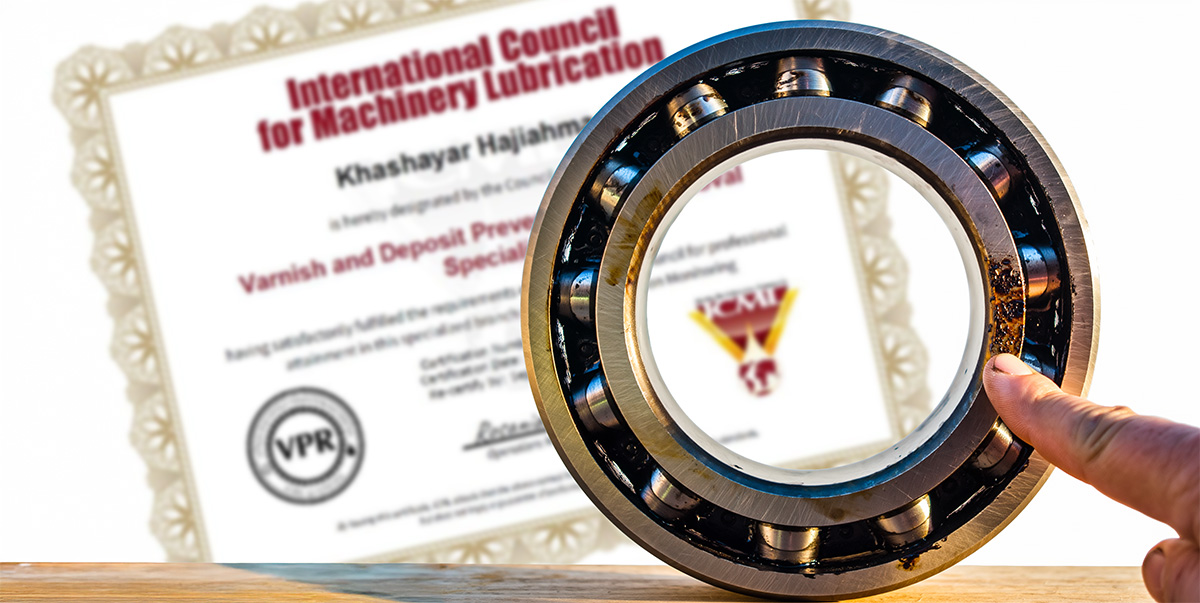
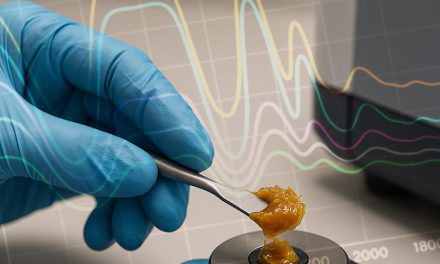
Khashayar Hajiahmad, CLS, MLA III, VIM, VPR, November 11, 2025 | When I first received my ICML Varnish and Deposit Prevention and Removal Specialist (VPR) certification in 2022, it marked a turning point in my professional journey. It was more than a recognition—it was the formal validation of years spent studying the chemistry behind lubricant degradation, oxidation by-products, and deposit formation in critical turbomachinery.
But in 2025, as I approached my re-certification, I asked myself: Why go through the process again? The answer came quickly: because varnish control is no longer the same field it was three years ago.
1. The Science of Varnish is evolving Faster Than Ever
When I wrote my original ICML article, “How I Confirmed My Varnish Knowledge with VIM and VPR Certification Badges,” the focus was on establishing credibility through structured education. At that time, we were mainly focused on deposit identification, MPC testing, and physical varnish removal.
Today, varnish chemistry has evolved into a multi-disciplinary science combining tribology, chemistry, filtration engineering, and asset reliability. New lubricant formulations, especially Group II/III base oils and gas-to-liquid (GTL) blends, show different oxidation pathways. Emerging anti-oxidant packages deplete differently, and modern filtration technologies—from ICB® ion exchange resins to electrostatic and adsorption hybrids—target the chemistry of degradation rather than just the symptoms.
To remain relevant and technically credible, I needed to re-engage with the latest science behind lubricant solubility management, acid removal, and molecular-level varnish precursors.
2. Recertification is a Reality Check, Not a Routine
Holding a certification for years doesn’t mean the knowledge stays sharp. ICML’s recertification process reminds professionals like me that knowledge must be refreshed, not presumed.
Every plant, turbine, and oil reservoir I’ve worked on since 2022 has challenged the boundaries of what we used to consider “standard varnish behavior.” For instance, I’ve seen systems where MPC numbers dropped after filtration but acids remained, leading to varnish re-appearance. These experiences forced me to re-evaluate root cause relationships between oxidation, solubility collapse, and the limitations of partial-removal technologies.
Renewing my VPR wasn’t a checkbox—it was a technical self-audit. It made me re-examine how my daily recommendations align with evolving ASTM standards (like D7843, D8045, and D8323) and how I interpret oil analysis data in complex field conditions.
3. Customers Expect Verified, Current Expertise
When a reliability engineer or maintenance superintendent invites me to discuss varnish in a turbine or compressor, it’s not just a sales meeting—it’s a trust exchange. They’re looking for someone who not only understands the mechanism but can translate analysis data into corrective action safely, quickly, and confidently.
Displaying an active VPR credential signals that my expertise is not outdated or anecdotal. It means that my knowledge of varnish and deposit management is benchmarked to the current ICML global standard, reviewed, and verified. In the same way that we demand calibrated sensors and certified pressure vessels, the industry deserves certified varnish specialists, because poor chemistry management leads directly to turbine downtime, high TAN, sticking servo valves, and reliability losses
4. VPR Renewal Reinforces My Commitment to the Lubrication Profession
Certifications expire. Commitment does not.
I believe that being a lubrication professional is not about passing exams; it’s about representing a discipline. Every recertification reminds me that I am part of a global community of specialists who are constantly learning, sharing, and improving the reliability of rotating equipment.
Through my work in Lubricant Chemistry Management (LCM), I’ve seen how deeply chemistry influences mechanical reliability, and I’ve seen how proactive varnish prevention can extend turbine oil life from 5 years to over 15. The VPR recertification reaffirms that this is not just a job, but a mission to protect assets, reduce waste, and advance reliability culture in every industry I work with.
5. Linking Knowledge with Real-World Practice
Over the last few years, I’ve collaborated with engineers across more than 30 nations in the Middle East, Africa, and Asia, and they all face different oil chemistry and climate challenges. From the hot, humid Gulf plants to arid North African compressor stations, varnish behavior changes drastically, and so must our approach.
ICML’s VPR framework gives me a common technical language to connect these experiences with proven best practices. It ensures that when I discuss MPC, RPVOT, or ion-exchange resin kinetics, it’s not opinion; rather, it is certified knowledge reinforced by experience.
Final Thoughts
Recertifying my VPR is not about collecting another badge—it’s about staying scientifically sharp, technically credible, and professionally accountable. Varnish prevention and removal is one of the most chemistry-intensive reliability topics of our time. This certification reminds me that learning never stops, and that every recertification is an opportunity to bring better solutions to every turbine, compressor, and hydraulic system that I serve.




Very important information Mr. Khashayar Hajiahmad!!!
These five reasons can actually form the rationale for renewing *any* of ICML’s professional certifications: the evolving science, the customer expectations, the reality—all of it is very practical.
Personally, over the last 10 years I trained and helped 1800 professionals approximately around the world to get certified, the sad truth is that most of them didn’t care to keep their certification updated.
Many professionals around the world doesn’t give much attention for this matter yet it is very important.
Thanks to Khashayar Hajiahmad we see how this can reflect positively on your career.
Thanks khashayar, great article
Khashayar speaks with wisdom and truth. Great narrative on this important ICML badge and recognition. Thanks for sharing with all.
Thank you Khashayar for sharing your thoughts on the importance of re-certification. As a lubrication specialist, I fully agree, certification is not just about getting a certificate. It is a chance to reflect on how much we have learned and grown since our last certification.
During re-certification, we are reminded to ask ourselves: Did we attend any lubrication or reliability-related conferences? Did we do any research or publish anything in the field? Did we update our knowledge? These are not just points to earn, they are great reminders to keep learning and stay up to date.
Wishing you continued success!
Excellent thoughts, and truly well-articulated. Your approach to the VPR certification renewal reflects both deep understanding and practical rationale. You are indeed a walking encyclopaedia in this field, and your knowledge of varnish removal technologies continues to inspire professionals like us.
Appreciate your insightful contributions as always. Keep sharing your expertise—it’s invaluable to the entire reliability community.